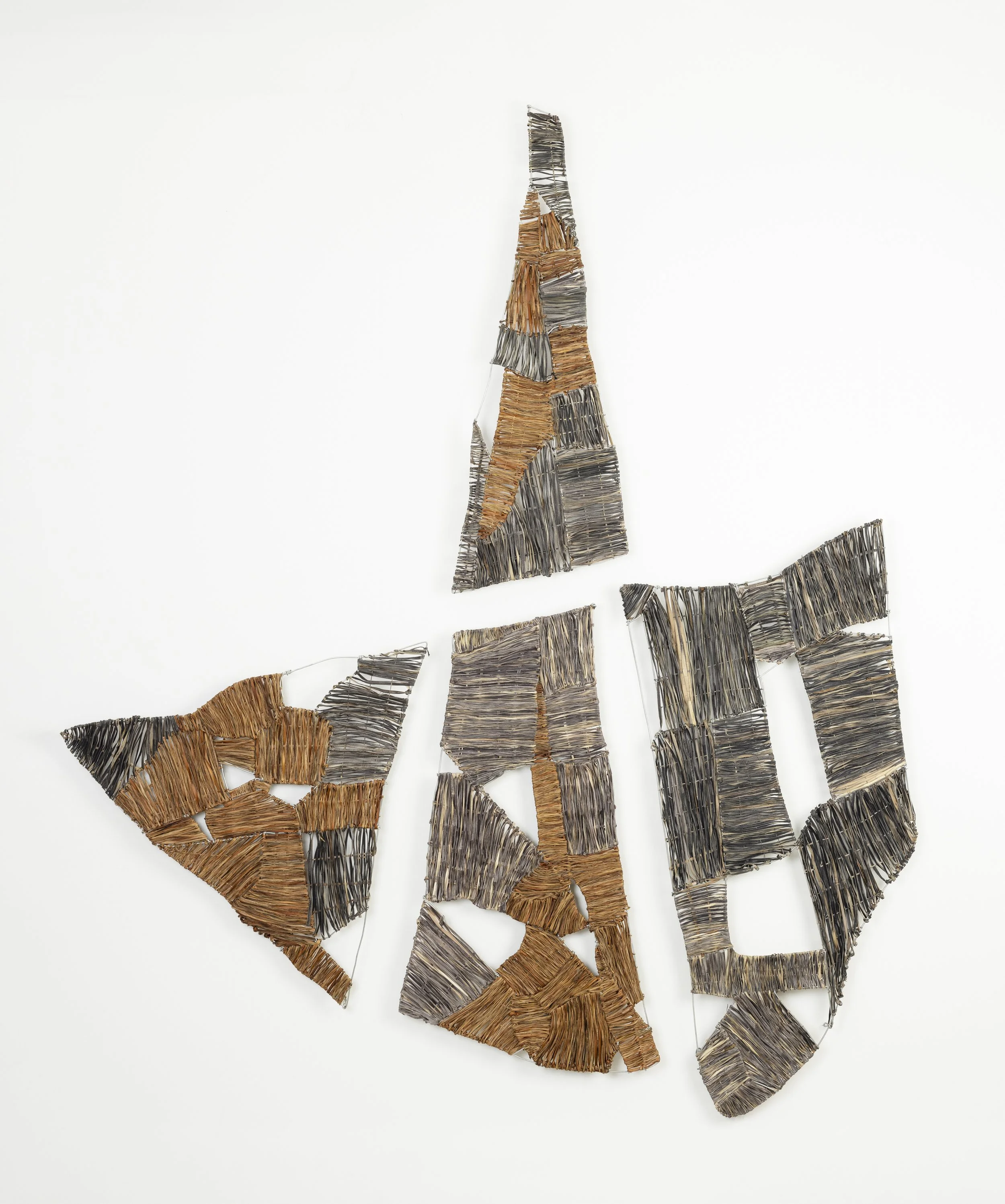
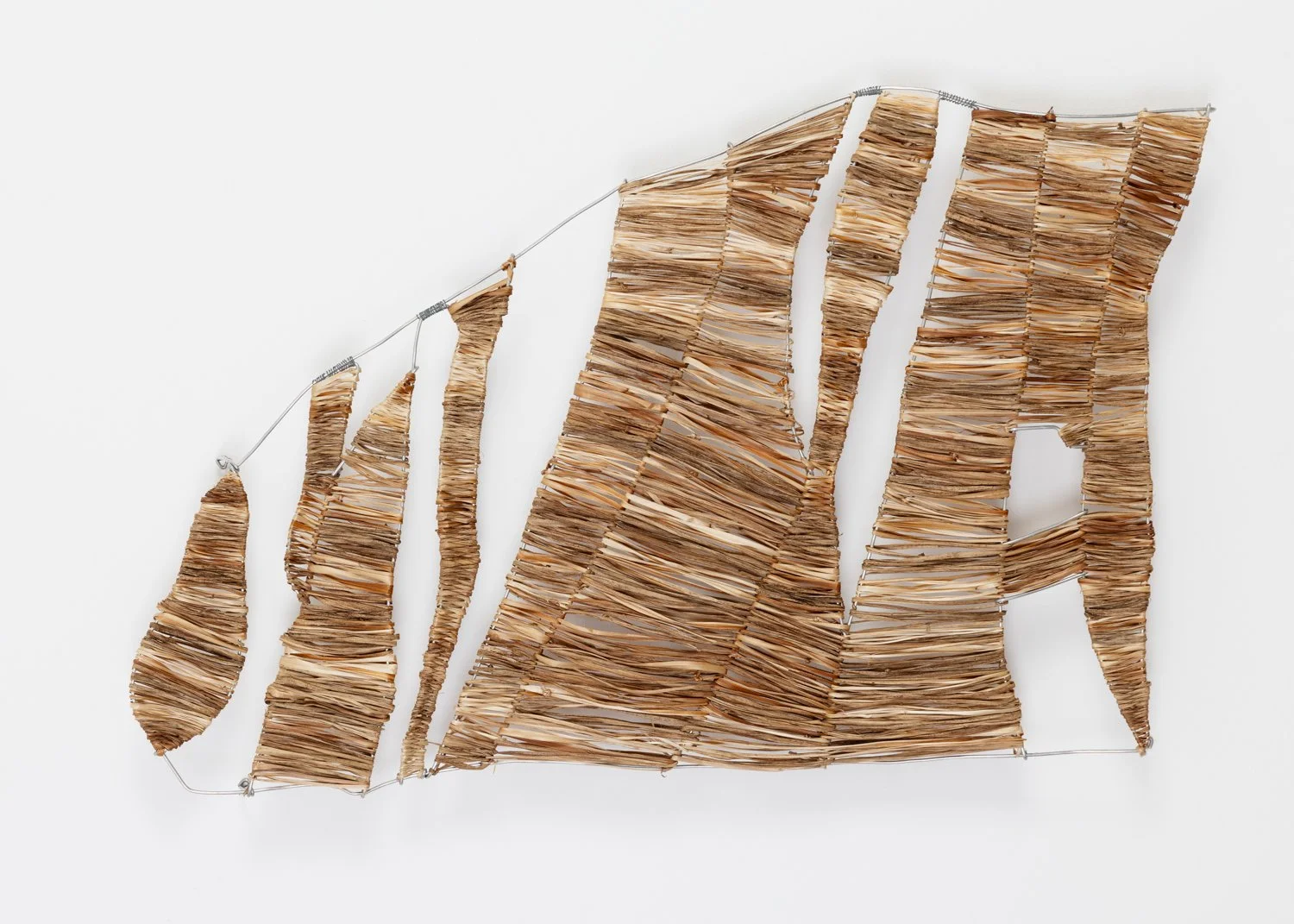
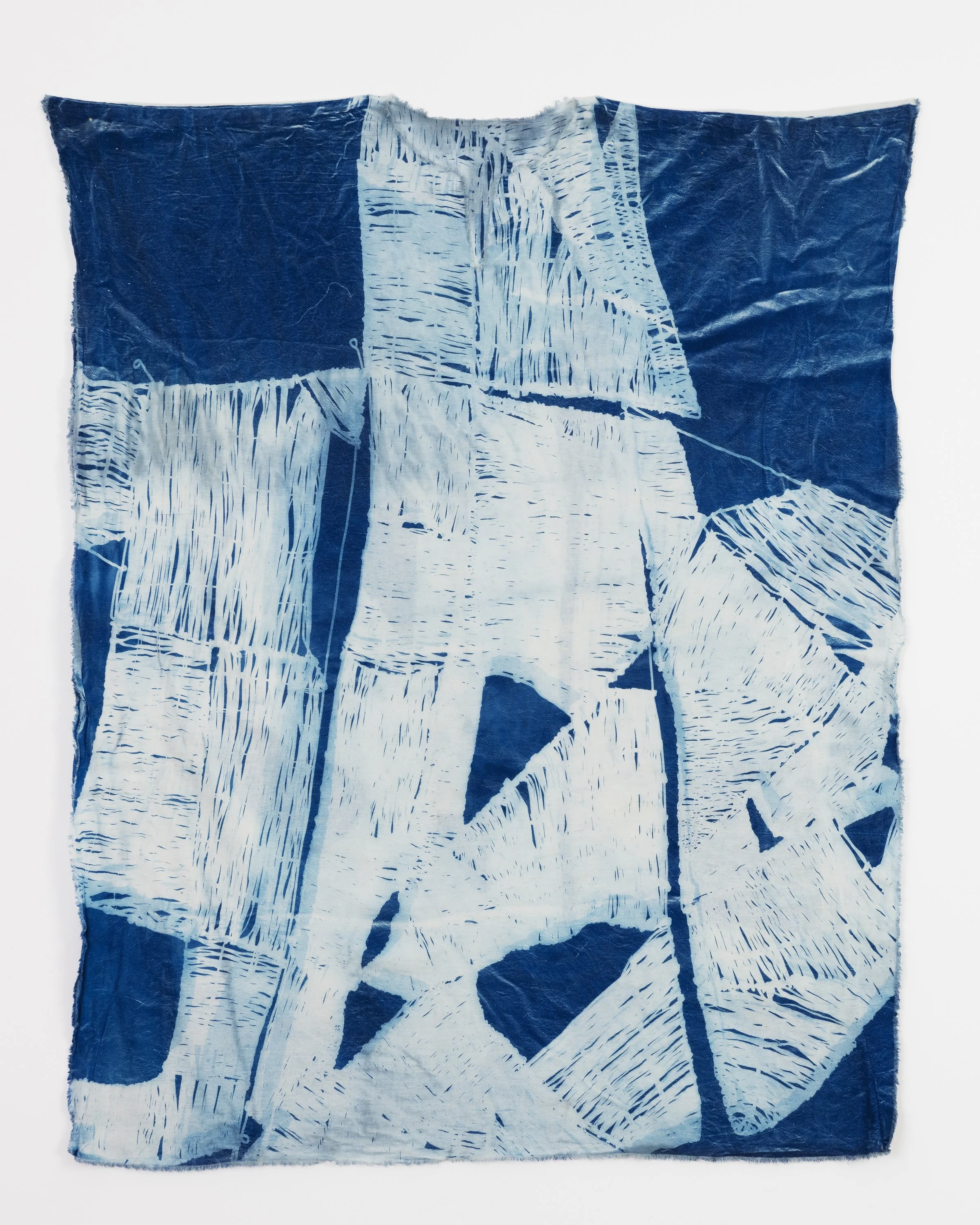
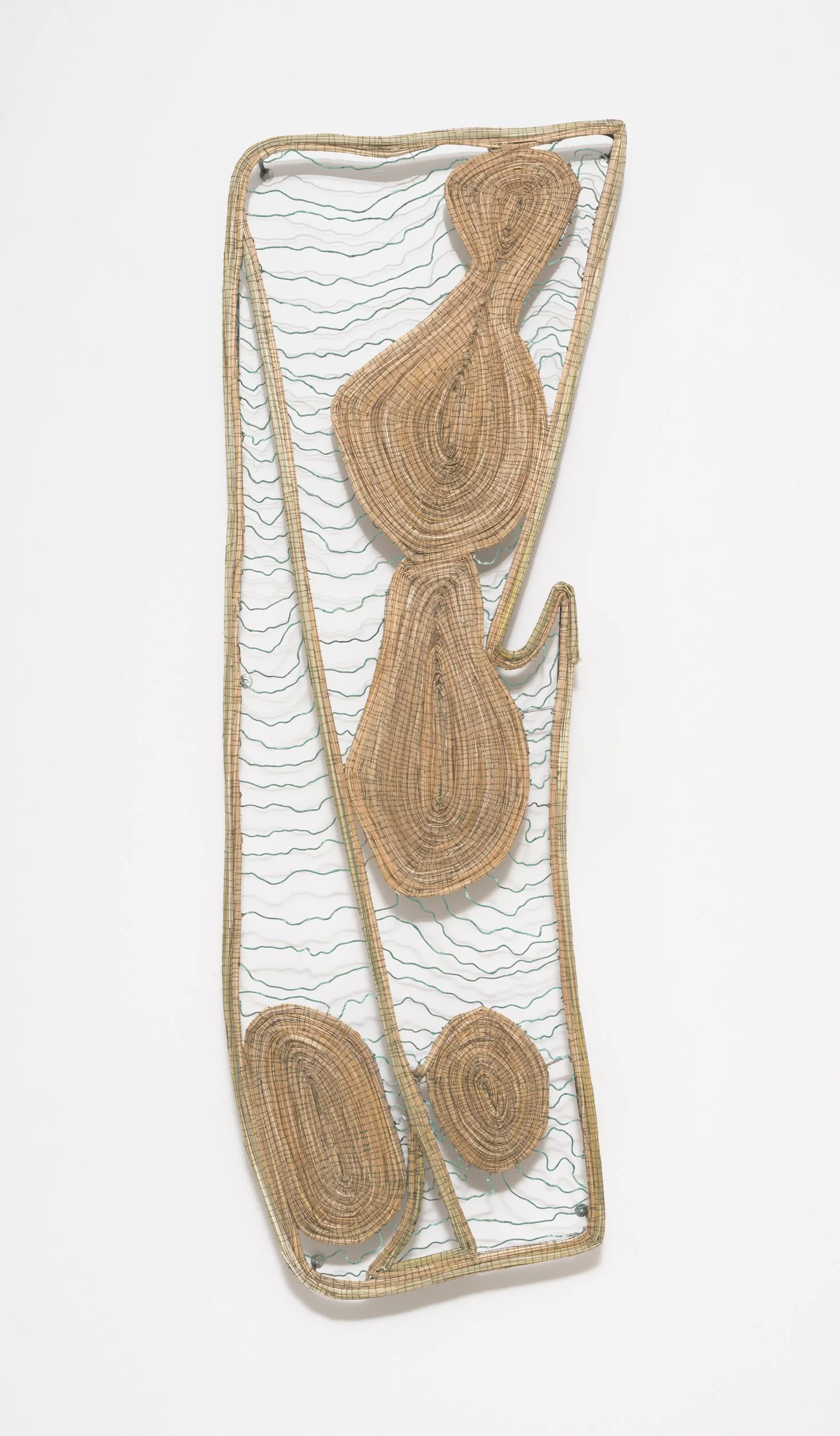
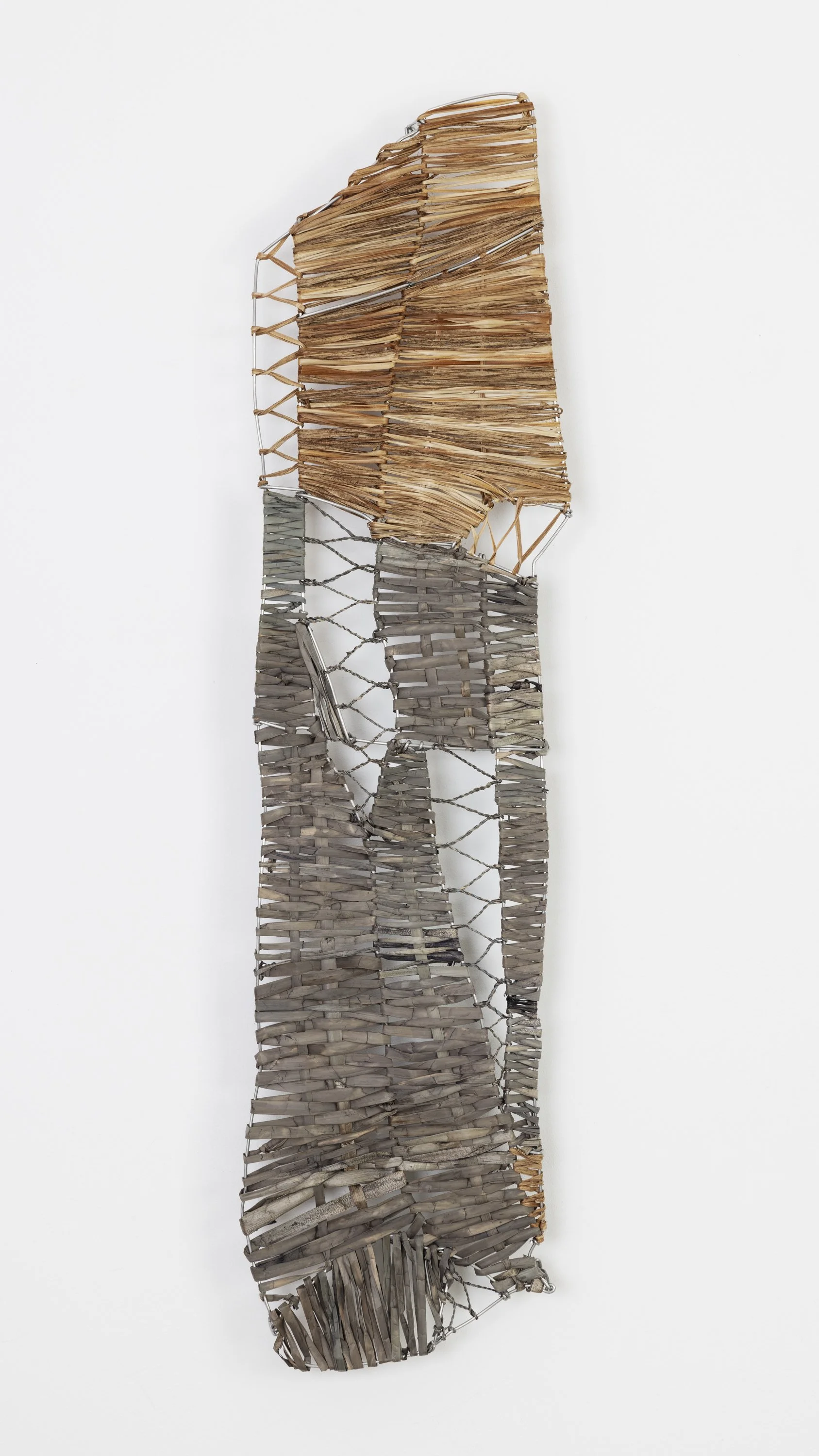
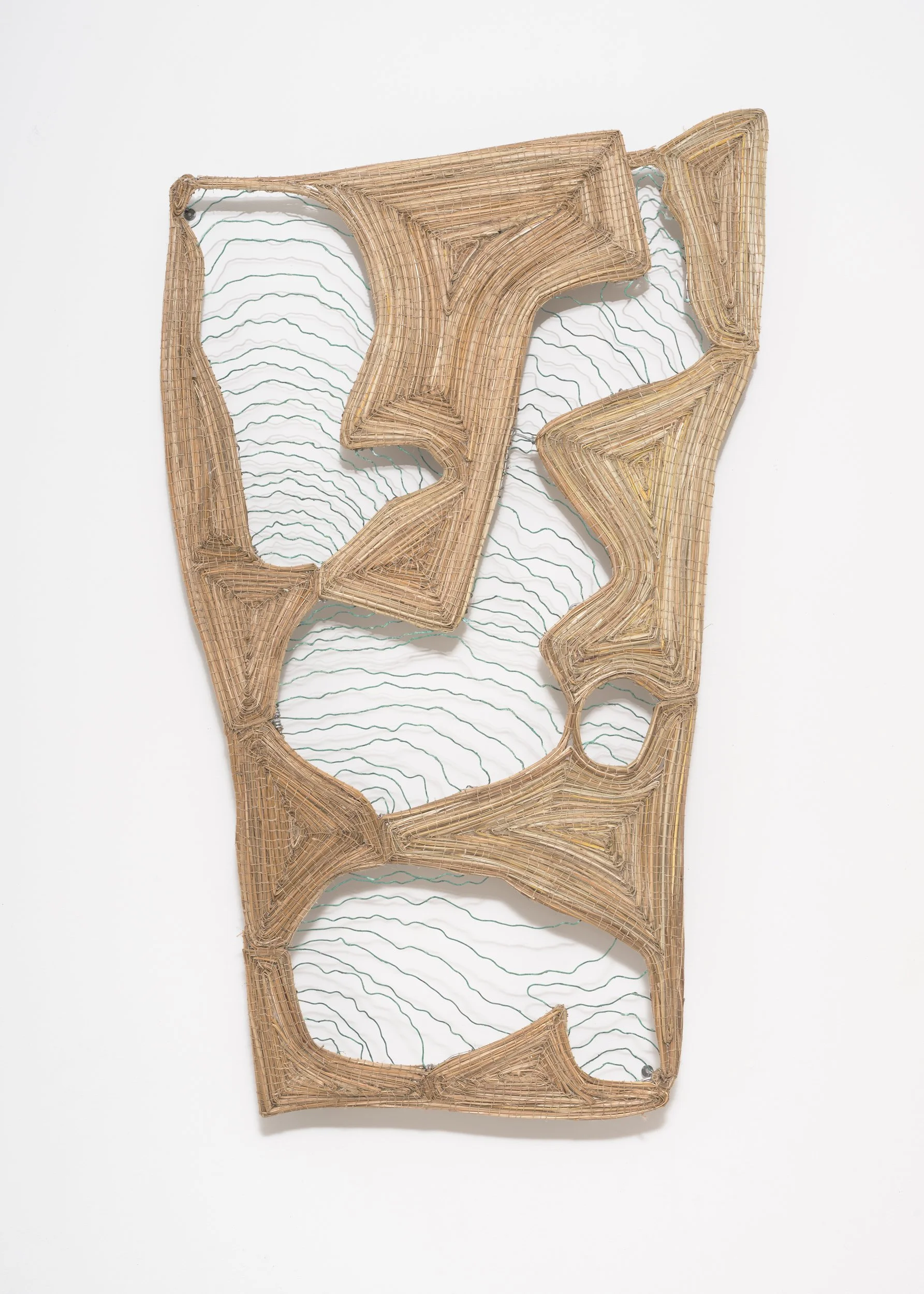
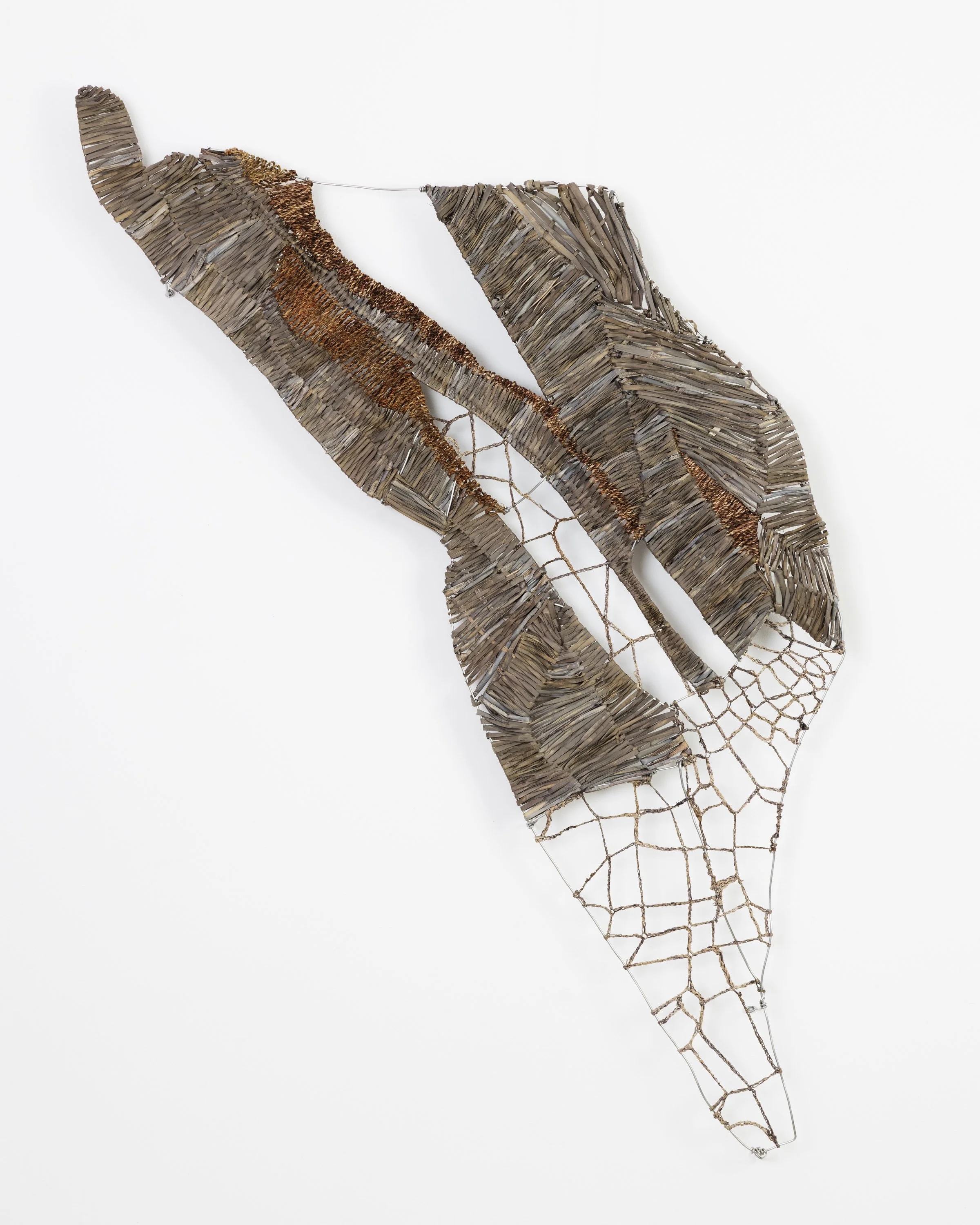
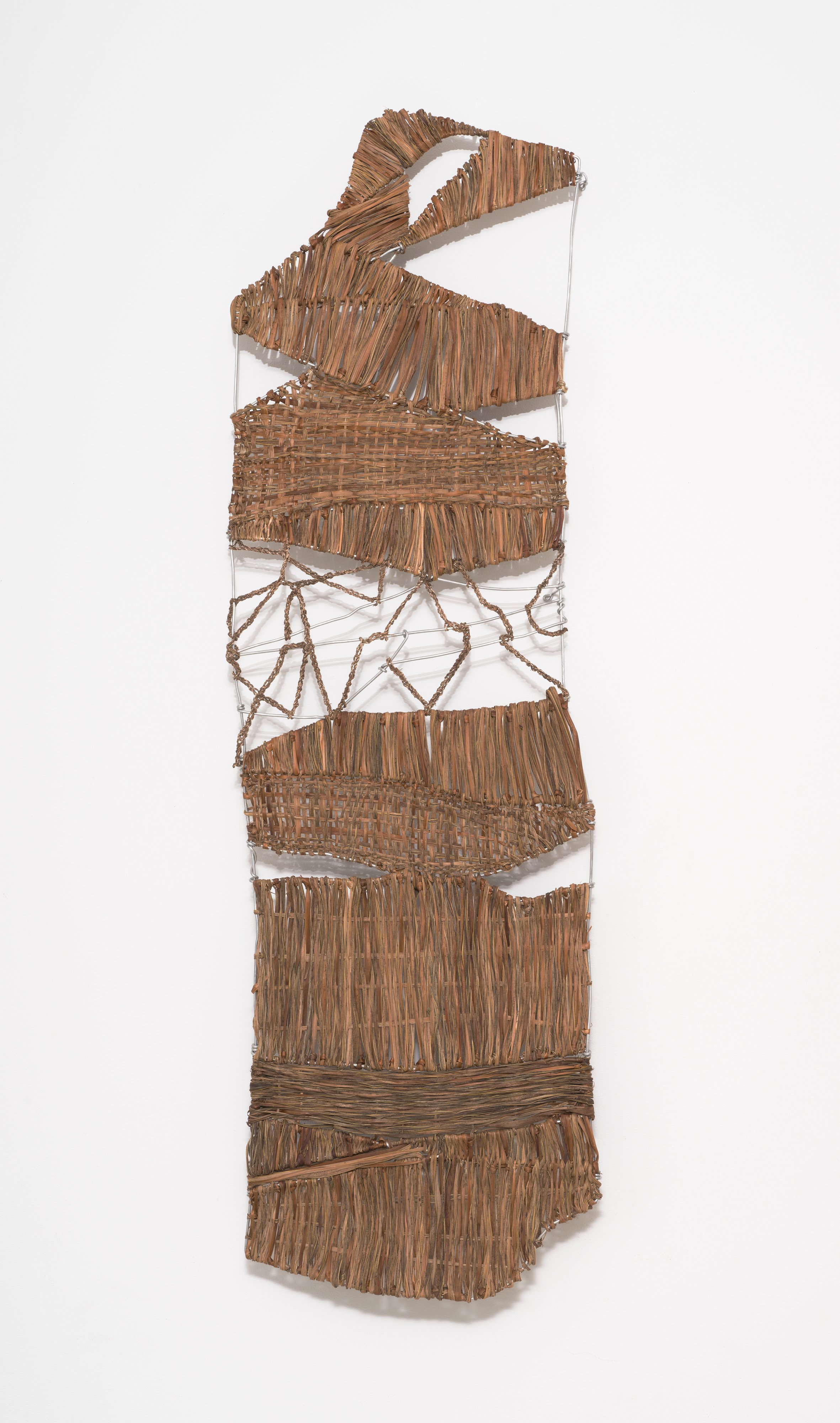
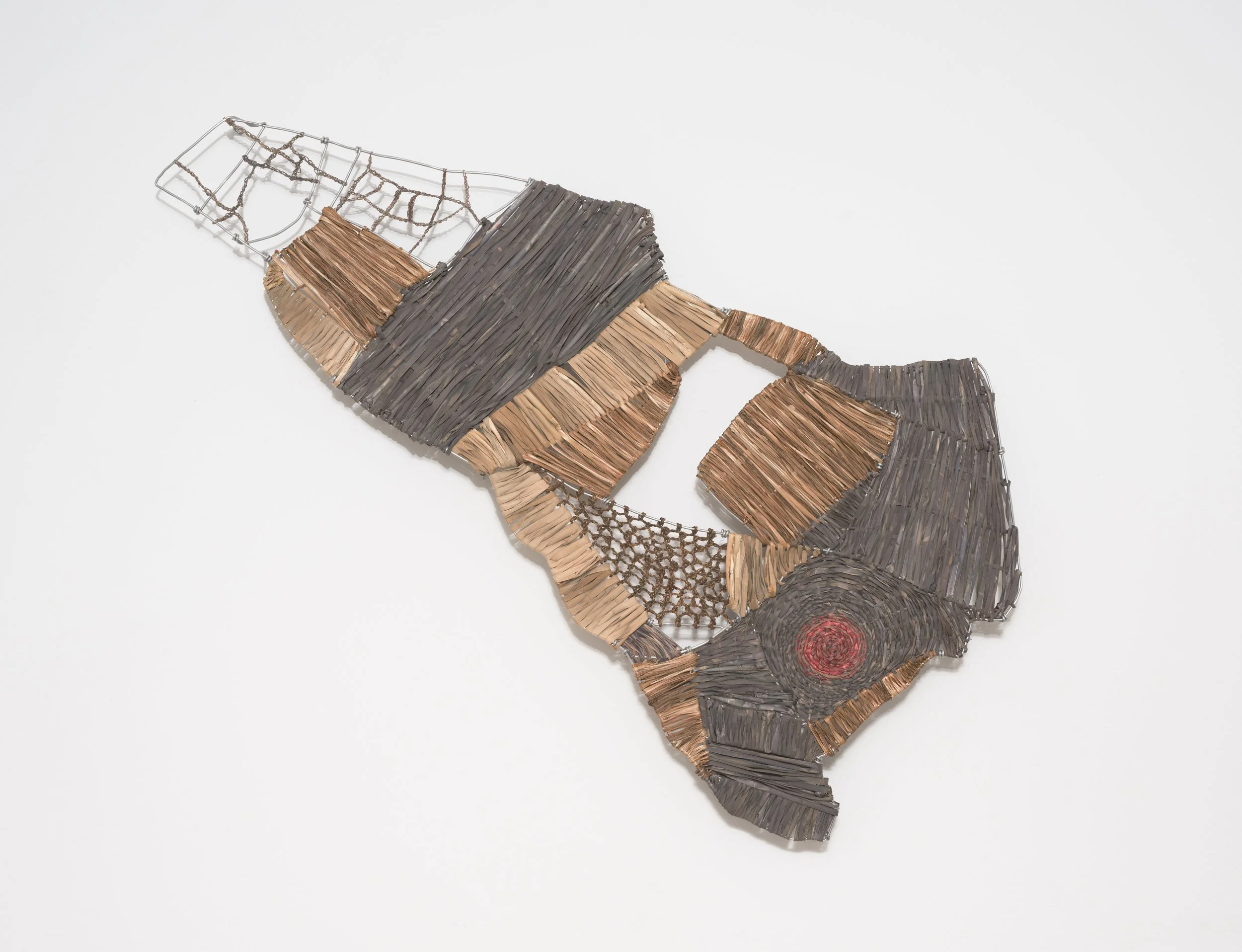
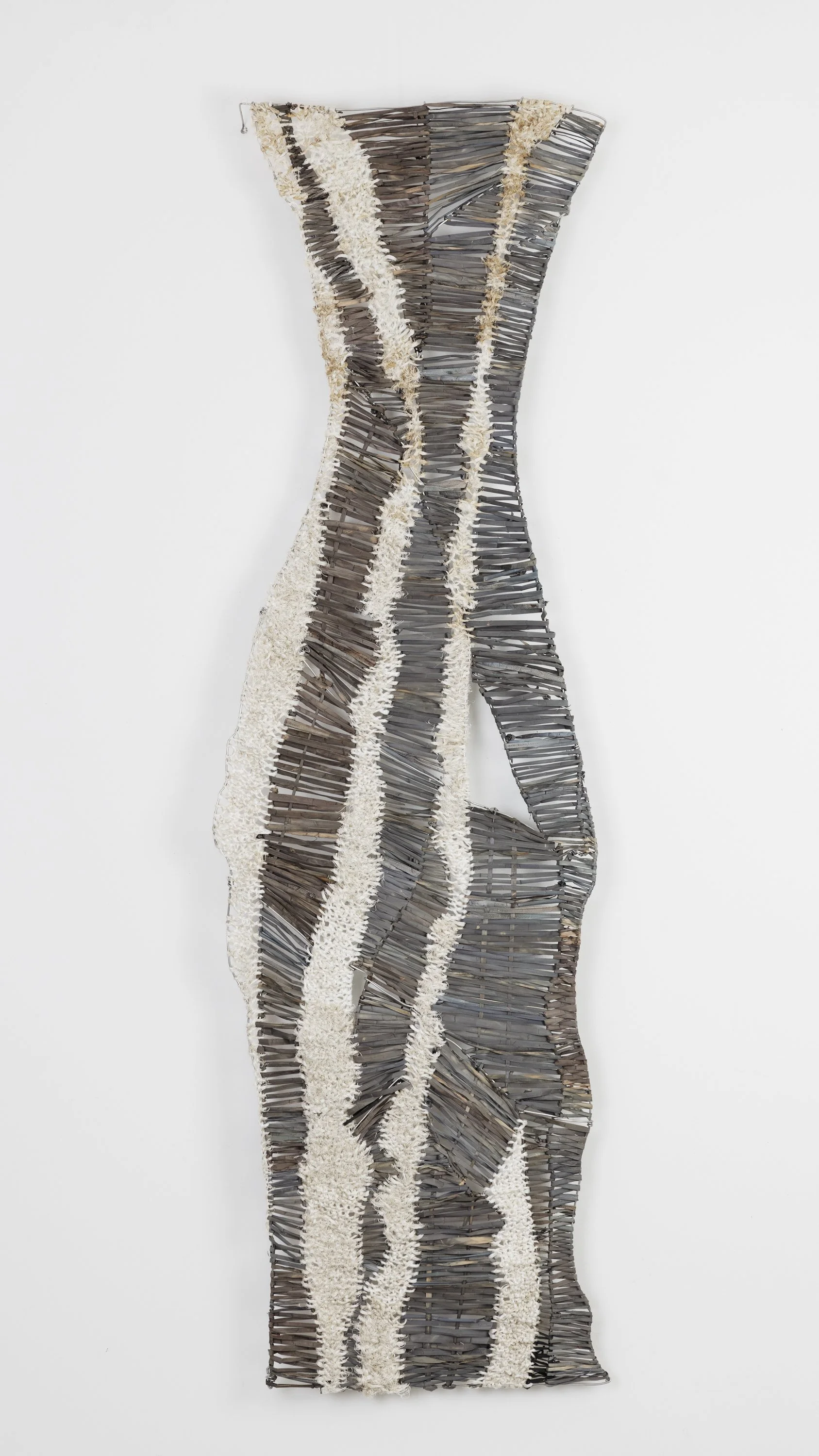
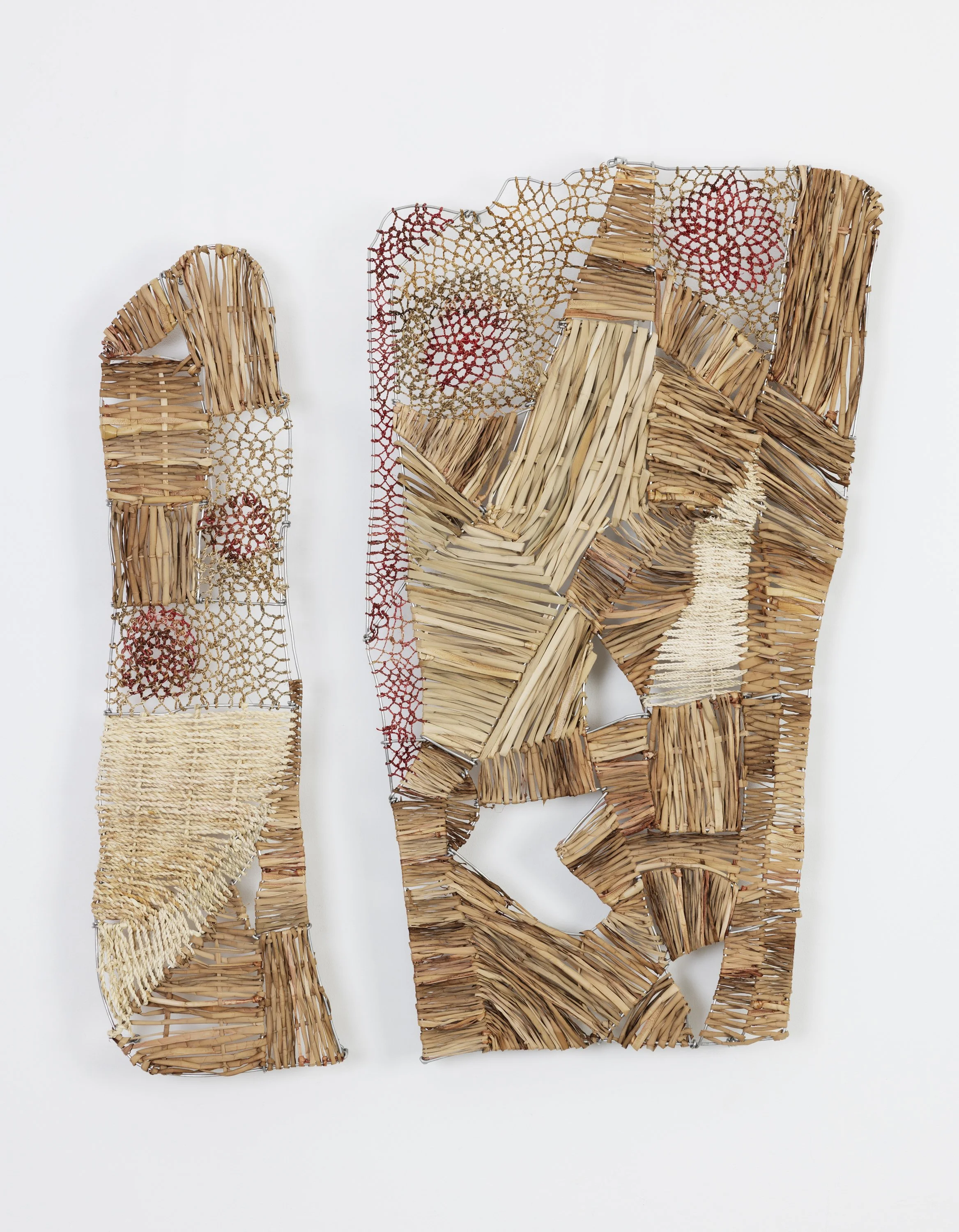
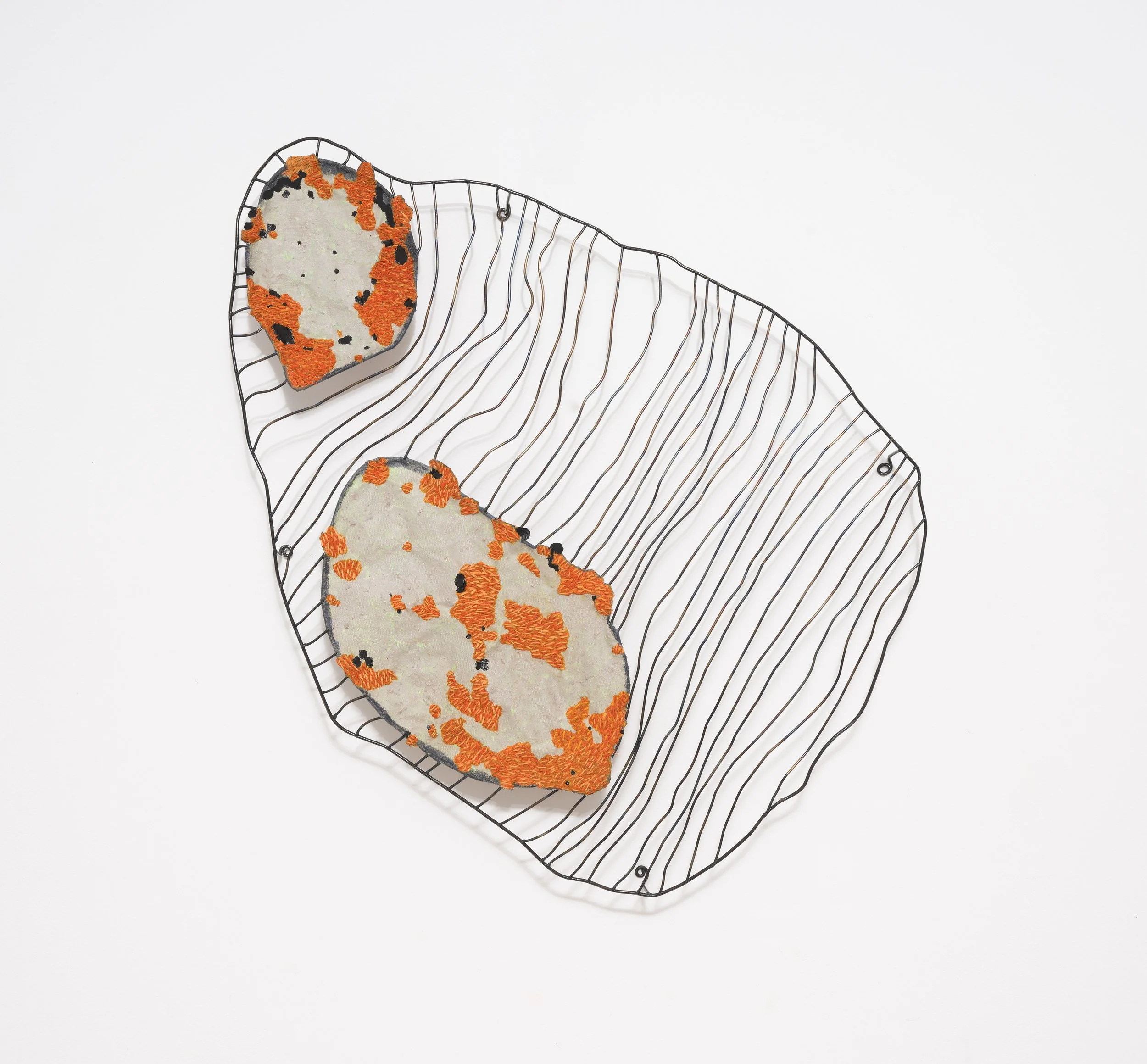
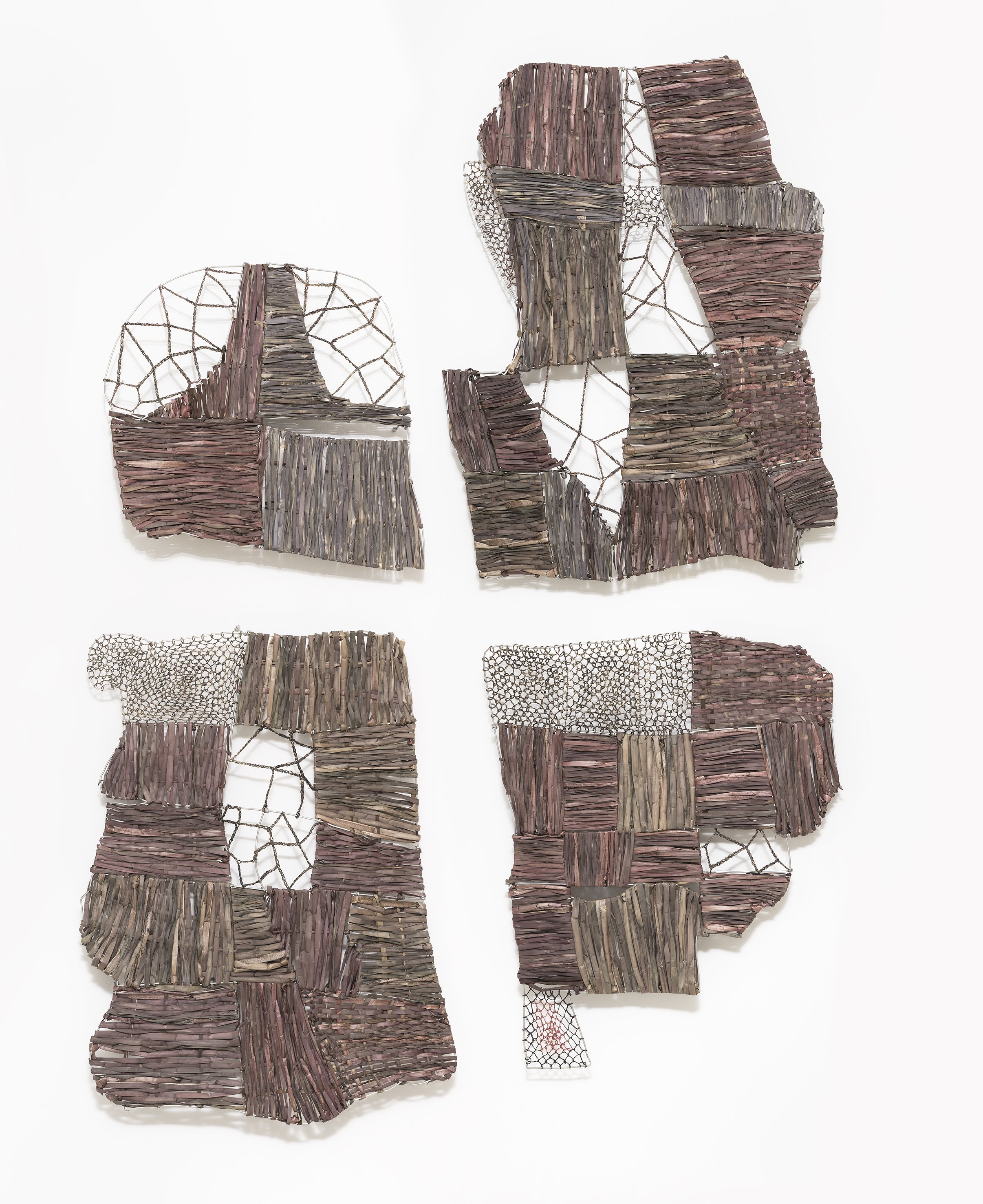
Weaving the Coast grew from my long-standing fascination with the patterns etched into the rocks along the shorelines of the South coast and beyond. Like for many Canberrans, the south coast is my closest escape hatch — a place to slip away from winter frost, summer heat, or simply the everyday. A quick trip down the highway offers a change of scenery, a swim, beautiful walks, and the quiet pleasure of experiencing the coastal environment.The rock formations along the coast have held my attention for nearly three decades and inspired this body of work. Their patterns formed over immense geological time horizons. Ancient flood plains dried and cracked into geometric shapes. New layers of sediment settled into those fractures, creating contrasting infills. Linear striations formed when sedimentary layers cooled and split under tectonic pressure. Over millennia, waves, sand and tidal movement washed across these surfaces, accelerating abrasion and carving out grids and channels. Saltwater trapped in crevices evaporated, and growing crystals slowly prised the rock apart. Gentle ripple marks became fossilised and preserved the memory of long‑gone waves.
Over the years I have observed, photographed and admired these manifold patterns. Some feel ordered and precise, others are loose and organic.
My art practice has always been driven by curiosity about materials, and after many years of experimenting and pushing the boundaries of traditional fibre techniques, I began translating these geological patterns into woven sculptures.
Each sculpture is intrinsically connected to place. I take a one‑to‑one copy of the specific sites named in the title using natural and recycled materials. The colours reference the original rocks, requiring dyeing of fibres to resemble the hues of the location. A fellow artist once compared my sculptures to drawings. My works are however not abstract impressions; they are grounded responses to Country, shaped by memory, admiration and a deep respect for the environments that have offered me contemplation, creativity and reset.
I use home‑grown and gifted fibres, collected beach debris such as ships rope, and recycled wire which reflects my belief that sustainable choices can be embedded in creative practice and anything can become supply for art. My sculptures hold my concerns for our environment and future generations, as well as the joyful calm and solace found in coastal visits.
Making these sculptures is a slow process that unfolds over several weeks and involves coiling, interlacing, twining and string making. For some works I twined string in lengths that felt as long as the beaches I walked along and looped it into the required shape. Working at this slow and repetitive pace lets me settle into the material and stay connected to the coastal patterns I am translating and transforming. It reflects the gentle, steady rhythm that fibre work brings into my practice.
Time is an important part of this project. Beaches shift constantly as sand moves across rock platforms or is swept away. The rocks themselves were shaped over thousands of years to become what we see today. Ripple marks preserved in stone, lichen slowly building up, softer layers eroding and quartz crystals forming seams all remind me how ephemeral and passing our presence is in comparison.
Over the years I have revisited each site with the original tracings and the finished sculptures, re-familiarising and connecting sculptures and rocks. For me the uncanny resemblance and connection between sculpture and site remains a source of deep satisfaction and joy.
I am privileged to live, work, and create on unceded Aboriginal Country. I hope that the way I treat and represent these rocks through my sculptures shows my deep respect for Country and its peoples and honours their beauty and perseverance.
Weaving The Coast 2026
21 August - 17 October 2026, Tuggeranong Art Centre, ACT